
The recipes of Romagna
From Bologna to Pesaro, from the lagoons of Comacchio to the villages of the Apennines: the cooking changes every few kilometres. The tortellino becomes a cappelletto, the piadina gets thinner towards the sea and turns into crescia in the Marche. Here you will find the home recipes, with quantities, every step, the times, what you will spend and the tricks handed down in families.
Same Romagna, different recipes
How the dishes change from Bologna to Pesaro, from the coast to the Apennines: six comparisons to tell at once where you are sitting at the table.
Filled pasta
- Bologna
- Small tortellini filled with pork loin, prosciutto, mortadella and Parmigiano, in capon broth.
- Romagna
- Bigger cappelletti, with a filling of fresh cheeses and a hint of lemon.
- Ferrara
- Cappellacci filled with butternut squash, sweet and savoury together.
- Pesaro and the Marche
- Cappelletti with meat: pork, veal and chicken.
- The Apennines
- Potato tortelli towards Tuscany, tortelli alla lastra with potato and squash in the valleys of Forlì.
The piadina
- Ravenna, Forlì, Imola
- As thick as a finger, smaller and crumbly: you break it into wedges.
- Rimini and Riccione
- Thin, wide and soft: you fill it and fold it in half.
- Cattolica, Pesaro
- Once you cross into the Marche it is called crescia.
- Urbino and Montefeltro
- Crescia sfogliata: with eggs and lard, rolled into a spiral, it opens in layers.
- Bologna
- Here the crescentina is fried and puffed up like a pillow.
The ragù
- Bologna
- Beef and pancetta, little tomato and milk at the end, on tagliatelle, never on spaghetti.
- Romagna
- Several meats together, often pork and beef, and long hours on the stove: it dresses cappelletti and strozzapreti.
- Ferrara
- The white ragù, without tomato, enclosed in the pastry of the macaroni pie.
Fish
- Comacchio
- The eel of the lagoons: marinated, grilled or stewed with vinegar.
- Cervia
- Fish baked in a crust of the mild salt from the salt pans.
- Cesenatico
- Oily fish: sardoncini in breadcrumbs on the grill, to eat with your hands.
- Rimini
- Poveracce clams with spaghetti, and cuttlefish with peas in spring.
- Fano
- The brodetto with vinegar and tomato paste, cooked without ever stirring.
Soups in broth
- Bologna
- Tortellini in capon broth: the Christmas dish.
- Forlì and Cesena
- Passatelli of bread, cheese and eggs: born so as not to waste bread.
- Faenza and Brisighella
- Spoja lorda, two sheets of pasta with a film of cheese, cut into little squares.
- All of Romagna
- Cheese cappelletti, at Christmas in every home.
Desserts
- Bologna
- Rice cake cut into diamonds, with almonds and liqueur.
- Ferrara
- The chocolate tenerina, moist inside.
- Romagna
- The ciambella for dunking, Sunday's zuppa inglese, the sabadoni of winter.
- San Marino
- Bustrengo, made of bread, apples and dried figs.
- The Apennines
- Castagnaccio of chestnut flour, without sugar.
What do you want to cook?
No recipe matches these words.
No recipe matches these words.
Montefeltro
2 recipes
 Image made with artificial intelligence
FlatbreadsMontefeltro
Crescia sfogliata
- Preparation1 h
- Cooking25 min
- In total1 h 30 min
- Serves6
- Costabout 4 €0.70 € per person
The "piadina" of Urbino and Montefeltro, but layered: the dough with eggs and lard is coiled into a snail and cooked on the griddle, so it opens into crisp layers. It is filled with cured meats, cheese or sautéed greens.
Ingredients and step-by-step method
Ingredients
- 500 g of 00 flour
- 2 eggs and about 150 ml of warm milk
- 150 g of soft lard (half in the dough, half for the layering)
- 10 g of salt, black pepper, a pinch of bicarbonate of soda
Method
- Knead the flour, eggs, milk, half the lard, salt, pepper and bicarbonate into a smooth dough; let it rest 30 minutes.
- Divide it into 6 pieces and roll each into a very thin sheet; spread it with a thin layer of lard.
- Roll the sheet up into a rope, then coil the rope into a snail. Let the snails rest 30 minutes.
- Flatten each snail and roll it out into a disc of about 20 cm.
- Cook it on the griddle or a hot pan, 3-4 minutes per side, turning it often: it should open into layers. Fill it straight away.
From place to place
- In Urbino it is made with eggs and lard and is flaky; towards the coast, in Pesaro and Fano, crescia is closer to piadina.
- Along the border between Romagna and the Marche, at Cattolica and Gabicce, the piadina starts being called crescia.
Grandma's secrets
- The lard should be soft as cream, otherwise the layers will not separate.
- Rest the spirals in the fridge for half an hour before rolling them out.
- While it cooks, press it with your hands at each turn: it opens into layers.
 Image made with artificial intelligence
First courseMontefeltro
Cresc tajat
- Preparation40 min
- Cooking40 min
- In total1 h 30 min
- Serves4
- Costabout 6 €1.50 € per person
In the dialect of the Montefeltro it means cut crescia: leftover polenta is kneaded with flour, rolled out and cut into irregular diamonds, then dressed with a bean sauce or wild greens. A peasant dish born so as to waste nothing, found today at the food festivals of the hinterland of Pesaro and Urbino.
Ingredients and step-by-step method
Ingredients
- 300 g of cooked, cold polenta (about 100 g of cornmeal)
- About 250 g of 00 flour
- 400 g of boiled borlotti beans
- 70 g of pancetta or lard, half an onion, 1 clove of garlic, rosemary
- 300 g of tomato passata, oil, salt, pepper and grated pecorino
Method
- Crumble the cold polenta on the board and knead it with the flour, a little at a time, until the dough is firm and no longer sticky.
- Roll it out 2-3 mm thick and cut it into irregular diamonds of 3-4 cm.
- For the sauce brown the chopped pancetta with the onion, garlic and rosemary, add the passata and cook for 15 minutes.
- Add the beans, mashing some of them, and let it simmer for another 15 minutes.
- Cook the pasta in salted water for 5-6 minutes, drain it into the sauce and serve with pecorino.
From place to place
- In the Montefeltro it is dressed with bean sauce; towards Pesaro and Fano also with sautéed wild greens or sausage sauce.
- In Romagna the same spirit lives in maltagliati with beans, made of plain pasta.
Grandma's secrets
- The polenta should be cold, ideally from the day before.
- Irregular diamonds are perfect: tajat means roughly cut.
- A drizzle of new-season raw oil at the end makes the difference.
San Marino
2 recipes
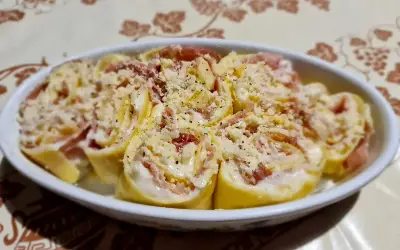
First courseSan Marino
Swallow's nests
- Preparation1 h
- Cooking30 min
- In total2 h
- Serves6
- Costabout 18 €3 € per person
San Marino's Sunday first course: rolls of egg pasta with ham and cheese, cut into spirals and baked with béchamel and sauce. Seen from above they really look like nests.
Ingredients and step-by-step method
Ingredients
- For the pasta: 300 g of 00 flour and 3 eggs
- 200 g of sliced cooked ham
- 200 g of mild sliced cheese (fontina or similar)
- 500 ml of béchamel sauce
- 300 g of ragù or tomato sauce
- 60 g of grated Parmigiano Reggiano
Method
- Roll the pasta into rectangles about 12 cm wide and blanch them one at a time in salted water for a minute; dry them on a cloth.
- Spread each rectangle with a thin layer of béchamel, cover with ham and cheese and roll it up tightly.
- Cut the rolls into spirals 4 cm high.
- In a baking dish spread béchamel and a little sauce, stand the spirals upright side by side and cover them with the rest of the béchamel, sauce and Parmigiano.
- Bake at 180 degrees for 25-30 minutes, until the top is golden.
From place to place
- In San Marino the classic filling is ham and cheese; every family then adds its own touch, mushrooms or spinach.
- In the Montefeltro and around Rimini you also find them with ragù instead of tomato sauce.
Grandma's secrets
- Blanch the pasta for just a few seconds: overcooked, it will not roll.
- Stand the rolls upright, packed close together: they will not open in the oven.
- You can make them in the morning and bake them at noon.
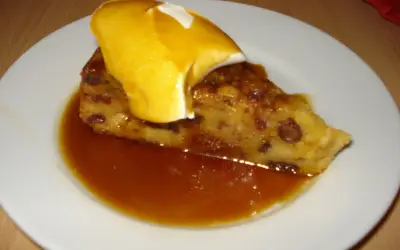
DessertSan Marino
Bustrengo
- Preparation40 min
- Cooking50 min
- In total1 h 30 min
- Serves8
- Costabout 8 €1 € per person
The humble cake of San Marino and the surrounding hills, made with whatever was in the house: stale bread, cornmeal, milk, honey, apples and dried fruit. It is made above all at Christmas.
Ingredients and step-by-step method
Ingredients
- 200 g of stale bread and 500 ml of milk
- 100 g of cornmeal and 100 g of 00 flour
- 100 g of sugar, 50 g of honey, 2 eggs
- 2 apples, 100 g of raisins, 50 g of dried figs
- The grated zest of an orange and a lemon, 3 tablespoons of oil, breadcrumbs for the tin
Method
- Break up the bread and let it soften in warm milk for half an hour; soak the raisins in warm water.
- Mash the bread with a fork and add the eggs, sugar, honey, both flours, the oil and the zests.
- Add the diced apples, the squeezed raisins and the chopped figs: the mixture should be thick.
- Pour into a greased tin sprinkled with breadcrumbs and bake at 180 degrees for about an hour. It is good the next day too.
From place to place
- In San Marino and around Rimini it has apples, dried figs and raisins; in the surrounding hills each family uses what is in the larder.
- In some homes there is more cornmeal and the bustrengo comes out denser, almost a sweet polenta.
Grandma's secrets
- The more stale bread you use, the better: it is the "waste nothing" dessert.
- The mixture should be as soft as polenta: if it is stiff add milk.
- It is eaten the next day, cold, in slices.


Rimini and the Riviera
3 recipes
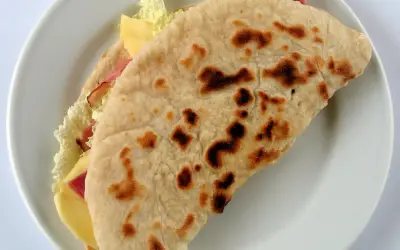
FlatbreadsRimini and the Riviera
Rimini-style piadina
- Preparation20 min
- Cooking15 min
- In total1 h
- Serves6
- Costabout 3 €0.50 € per person
Thinner, wider and softer than the inland one: it is the piadina of the Rimini coast, cooked on the "testo" griddle and eaten hot with prosciutto, squacquerone and rocket or with wild greens.
Ingredients and step-by-step method
Ingredients
- 500 g of 00 flour
- 60 g of lard (or 60 ml of extra virgin olive oil)
- About 250 ml of warm water
- 10 g of salt and a pinch of bicarbonate of soda
Method
- Knead the flour, lard, salt and bicarbonate, adding the water a little at a time, until you have a smooth, soft dough.
- Let it rest covered for 30 minutes, then divide it into 6 balls.
- Roll each ball out into a thin disc, 2-3 mm thick and about 30 cm across.
- Cook it on the griddle or a very hot non-stick pan, 1-2 minutes per side, pricking it with a fork if it blisters.
- Fill it straight away, fold it in half and eat it hot.
From place to place
- In Ravenna, Forlì and Imola the piada is thick and smaller, in Rimini and Riccione thin, wide and soft.
- From Cattolica south towards Pesaro it is called crescia; in Urbino it becomes crescia sfogliata.
- Piadina Romagnola has PGI status, and the Rimini style is recognised separately in its rules.
Grandma's secrets
- Lard, not oil: that is what makes it soft and fragrant.
- Heat the griddle for a long time and turn the piadina often, pricking the bubbles that puff up with a fork.
- Keep them warm stacked in a clean tea towel: they stay soft.
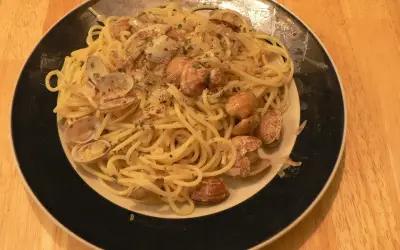
First courseRimini and the Riviera
Spaghetti with poveracce clams
- Preparation20 min
- Cooking15 min
- In total2 h 30 min
- Serves4
- Costabout 18 €4.50 € per person
Poveracce are the Adriatic clams, small and full of flavour, fished off the Riviera: with spaghetti they make Rimini's best-loved seafood first course.
Ingredients and step-by-step method
Ingredients
- 1 kg of poveracce (Adriatic clams)
- 350 g of spaghetti
- 2 garlic cloves and a bunch of parsley
- Half a glass of dry white wine
- Extra virgin olive oil and, if you like, chilli
Method
- Leave the clams in cold salted water for at least two hours, changing the water a couple of times, so they release their sand.
- In a wide pan heat the oil with the garlic, add the clams, splash in the wine and cover: in 3-4 minutes they open.
- Take out the clams, throw away any that stayed closed and strain the juices they left.
- Cook the spaghetti a couple of minutes less than usual and finish cooking them in the pan with the strained juices.
- Put the clams back, add the chopped parsley and a drizzle of raw oil, and serve at once.
From place to place
- They are Chamelea gallina: poveracce in Romagna, lupini or common clams in the rest of Italy.
- In Rimini they are also eaten simply sautéed in a pan, alla marinara, with bread for the juices.
Grandma's secrets
- Tap the clams one by one on the sink: the ones full of sand sound different.
- Do not salt the sauce: the clam juice is already salty.
- Finish cooking the spaghetti in the sauce: it is the step that makes the dish.
 Image made with artificial intelligence
Main courseRimini and the Riviera
Cuttlefish with peas
- Preparation20 min
- Cooking40 min
- In total1 h
- Serves4
- Costabout 20 €5 € per person
A seafood main course that tastes of spring, when the cuttlefish come close to the shore and the peas are in the fields: stewed with a little tomato, it is found in every home and trattoria of the Riviera, from Rimini to Cesenatico.
Ingredients and step-by-step method
Ingredients
- 1 kg of cuttlefish, cleaned and cut into strips
- 500 g of peas, freshly shelled or frozen
- 200 g of tomato passata
- 1 small onion or 1 clove of garlic, half a glass of white wine
- Extra virgin olive oil, parsley, salt, pepper
Method
- In a pan soften the chopped onion in the oil over a low heat.
- Add the cuttlefish and let them take on flavour for a few minutes, then pour in the wine and let it evaporate.
- Add the passata and a glass of water, cover and cook on a low heat for 20 minutes.
- Add the peas, season and carry on for another 15-20 minutes, until the cuttlefish are tender and the sauce has thickened.
- Finish with chopped parsley and serve with bread or piadina to mop up the sauce.
From place to place
- Some make them without tomato, just with wine and peas, others with tomato; towards the Marche often with a pinch of chilli.
- On the Riviera it is the dish of spring, when cuttlefish come close to the shore to lay their eggs.
Grandma's secrets
- Keep the cuttlefish in the freezer overnight before cooking: they turn more tender.
- Frozen peas should go in only for the last 10 minutes.
- Cook on a low heat with the lid on: on a high heat cuttlefish turn rubbery.


Ravenna, Faenza and the coast
4 recipes
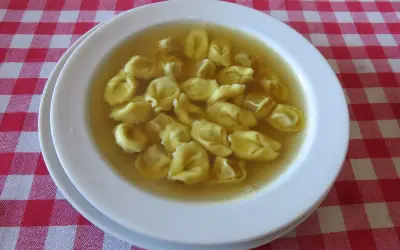
First courseRavenna, Faenza and the coast
Romagna cappelletti in broth
- Preparation1 h 40 min
- Cooking10 min
- In total2 h 30 min
- Serves6
- Costabout 22 €3.70 € per person
Romagna's Christmas dish: unlike tortellini, the filling is mostly fresh cheese. Pellegrino Artusi describes them as "Cappelletti all'uso di Romagna", with a little capon breast.
Ingredients and step-by-step method
Ingredients
- For the pasta: 400 g of 00 flour and 4 eggs
- 300 g of fresh cheese: ricotta, raviggiolo or Squacquerone di Romagna
- 100 g of grated Parmigiano Reggiano
- 1 egg, nutmeg, the grated zest of half a lemon, salt
- Optional, as in Artusi: half a capon breast cooked in butter and minced
- 2 litres of capon stock
Method
- Mix the cheeses with the egg, nutmeg, lemon zest and a pinch of salt (and the capon, if you use it): the filling must be firm.
- Roll out a thin sheet and cut it into squares of about 4 cm.
- Put a little filling in the middle, fold into a triangle, then wrap it around your finger joining the two tips: the top point stays raised, like a hat.
- Let them dry for an hour on a floured tray.
- Cook them in boiling stock for 4-5 minutes and serve them in their stock.
From place to place
- In Romagna the filling is fresh cheese; inland from Forlì and Cesena some add a little meat, as Artusi did with capon.
- Across the border, in Pesaro and the Marche, cappelletti almost always contain meat.
- At Christmas in Romagna they are eaten in broth; the rest of the year also dry, with ragù.
Grandma's secrets
- Lemon zest is the Romagna signature: grate just a little, only the yellow part.
- If the cheese is watery, drain it in a sieve the night before: the filling must be dry.
- Close them around your little finger: small and all the same, they cook in the same time.
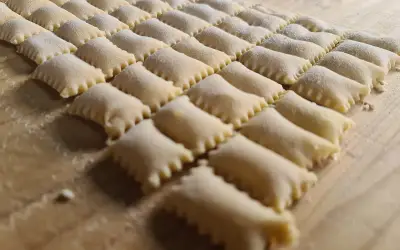
First courseRavenna, Faenza and the coast
Spoja lorda in broth
- Preparation45 min
- Cooking5 min
- In total1 h
- Serves4
- Costabout 10 €2.50 € per person
The dialect name means dirty sheet: two very thin sheets of pasta with a film of cheese in between, cut into small squares and cooked in broth. It is the family soup of the Lamone valley, between Faenza and Brisighella, born to use up the leftover cappelletti filling.
Ingredients and step-by-step method
Ingredients
- For the pasta: 300 g of 00 flour and 3 eggs
- 200 g of soft fresh cheese: ricotta, raviggiolo or squacquerone
- 80 g of grated Parmigiano Reggiano and 1 egg
- Nutmeg, the grated zest of half a lemon, salt
- 1.5 litres of meat or capon broth
Method
- Mix the cheeses with the egg, nutmeg, lemon zest and a pinch of salt: you want a spreadable cream.
- Knead the flour and eggs and roll out two very thin sheets of the same size.
- Spread a thin layer of cream over the whole first sheet, cover with the second and run the rolling pin over lightly so they stick.
- With a fluted pastry wheel cut squares of about 1.5 cm and let them dry for half an hour on a floured tray.
- Cook them in boiling broth for 3-4 minutes and serve with more Parmigiano.
From place to place
- Between Faenza, Brisighella and Castel Bolognese every family has its own cheese: raviggiolo in the hills, ricotta or squacquerone on the plain.
- In the inns of the Lamone valley you also find it without broth, with ragù or butter and sage.
Grandma's secrets
- The film of cheese must be very thin: overdo it and the sheets come apart in the broth.
- Let it dry before cooking and stir very little in the broth.
- It was born to use up leftover cappelletti filling: when you make them, keep a little aside.
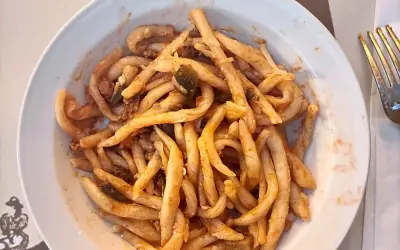
First courseRavenna, Faenza and the coast
Strozzapreti with sausage and tomato
- Preparation40 min
- Cooking30 min
- In total1 h 15 min
- Serves4
- Costabout 8 €2 € per person
The humble pasta of Romagna, made without eggs: just flour and water, rolled by hand between the palms. It is found all over the region, from Ravenna to Rimini, and every trattoria has its own sauce.
Ingredients and step-by-step method
Ingredients
- 400 g of 00 flour and about 200 ml of warm water, a pinch of salt
- 300 g of pork sausage
- 400 g of passata or peeled tomatoes
- Half an onion, extra virgin olive oil, salt, Parmigiano
Method
- Knead the flour, water and salt for about ten minutes; let the dough rest covered for 30 minutes.
- Roll out a sheet 2-3 mm thick and cut it into strips 2 cm wide.
- Take a piece of strip and rub it between your palms as if rolling it, tearing it off at 4-5 cm: it should come out twisted.
- Brown the chopped onion in the oil, add the crumbled sausage, then the tomato; cook for 20-25 minutes.
- Cook the strozzapreti in salted water for 4-6 minutes, drain them into the sauce and serve with Parmigiano.
From place to place
- In Ravenna and Forlì they are just flour and water; around Rimini some add an egg.
- The sauce follows the season: sausage and tomato in winter, peas in spring, on the coast clams or fish sauce.
- There are two legends about the name: greedy priests who choked on them, or housewives who made them by "strangling" the dough in anger at the priests coming to lunch.
Grandma's secrets
- Use lukewarm water, not cold: the dough becomes more elastic.
- The tighter you roll them, the more they stay al dente.
- They should not all be the same: that is the beauty of handmade.
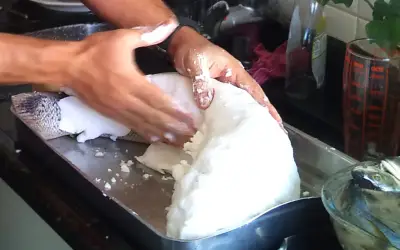
Main courseRavenna, Faenza and the coast
Sea bass baked in Cervia salt
- Preparation15 min
- Cooking40 min
- In total50 min
- Serves4
- Costabout 28 €7 € per person
In Cervia the salt from the salt pans is "sweet", less bitter: it is perfect for baking fish in a crust. The salt does not get into the flesh, which stays tender and fragrant.
Ingredients and step-by-step method
Ingredients
- 1 sea bass of about 1.2 kg, gutted but not scaled
- 2 kg of coarse Cervia salt
- 2 egg whites
- A lemon, rosemary, bay leaves and parsley
- Extra virgin olive oil to serve
Method
- Heat the oven to 200 degrees. Fill the belly of the fish with lemon slices and herbs.
- Mix the salt with the egg whites and a splash of water: it should feel like wet sand.
- Spread a bed of salt in a baking tin, lay the fish on it and cover it completely with the rest of the salt, pressing well.
- Bake for 35-40 minutes.
- Break the crust at the table, remove the skin and serve the fillets with a drizzle of oil and lemon juice.
From place to place
- In Cervia they use salt from the salt pans, called sweet because it is low in the salts that taste bitter.
- Along the coast sea bream is done the same way; in the Comacchio lagoons they used lagoon-raised sea bass.
Grandma's secrets
- Do not scale the fish: the scales protect the flesh and the skin comes off in one piece.
- Allow about 30 minutes for a one-kilo fish, a few minutes more if it is bigger.
- The salt of the crust cannot be reused: it has taken in the moisture and taste of the fish.


Forlì, Cesena and Cesenatico
5 recipes
First courseForlì, Cesena and Cesenatico
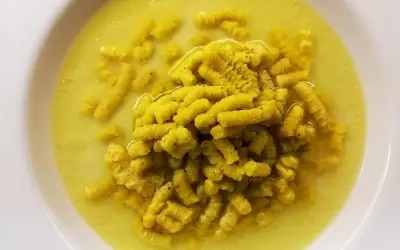
Passatelli in broth
- Preparation15 min
- Cooking5 min
- In total45 min
- Serves4
- Costabout 9 €2.30 € per person
Breadcrumbs, cheese and eggs pressed through a potato ricer or the special iron: it is Romagna's home dish, born so as not to waste bread. Pellegrino Artusi, who came from Forlimpopoli, lists them among his soups.
Ingredients and step-by-step method
Ingredients
- 100 g of fine breadcrumbs from stale bread
- 100 g of grated Parmigiano Reggiano
- 3 eggs
- Nutmeg and grated lemon zest
- Optional, as in Artusi: 20 g of beef marrow
- 1.5 litres of meat stock
Method
- Mix the breadcrumbs, Parmigiano, nutmeg and lemon; add the eggs (and the melted marrow) and knead into a firm mixture.
- Let it rest covered for half an hour.
- Bring the stock to the boil, then press the mixture through the passatelli iron or a coarse potato ricer and cut 4 cm lengths straight over the pot.
- When they float back up (1-2 minutes) they are ready: serve them in the stock.
From place to place
- Inland in Romagna they are eaten in broth; on the coast, from Cesenatico to Rimini, today also without broth, with clams, mussels or fish sauce.
- Pellegrino Artusi, from Forlimpopoli, also put beef marrow in the mixture.
- Towards Urbino there is a version with a little beef and spinach in the mixture.
Grandma's secrets
- The breadcrumbs must come from real stale bread, finely grated: shop-bought ones absorb too much.
- If they fall apart in the broth the mixture was too soft: one more spoonful of breadcrumbs.
- The broth should simmer gently: if it boils hard the passatelli break.
FlatbreadsForlì, Cesena and Cesenatico
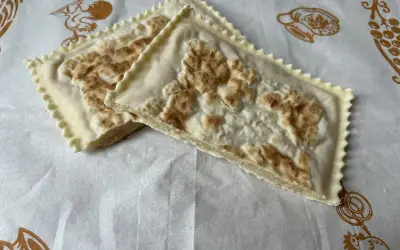
Tortelli alla lastra
- Preparation1 h 15 min
- Cooking30 min
- In total2 h
- Serves6
- Costabout 8 €1.30 € per person
Thin sheets of flour and water filled with potato and pumpkin, cooked on the "lastra", a sandstone slab heated over the fire: they come from the upper Bidente valley, around Corniolo and Santa Sofia. At home a cast-iron pan will do.
Ingredients and step-by-step method
Ingredients
- For the dough: 500 g of 00 flour, about 250 ml of warm water, a spoonful of lard or oil, salt
- 600 g of potatoes and 300 g of pumpkin
- 50 g of chopped pancetta or lard, 1 garlic clove
- 50 g of grated pecorino or Parmigiano, salt and pepper
Method
- Boil the potatoes and steam or bake the pumpkin; mash everything together.
- Brown the pancetta with the garlic, remove the garlic and add the fat to the filling with the cheese, salt and pepper.
- Knead the flour, water, lard and salt, let the dough rest 30 minutes and roll out thin round or rectangular sheets.
- Spread the filling over half of each sheet, fold it over and seal the edges; cut into hand-sized rectangles.
- Cook them on the slab or in a very hot cast-iron pan, without fat, 3-4 minutes per side, until brown blisters appear. They are eaten hot.
From place to place
- In Santa Sofia and the upper Bidente valley the filling is potato and squash.
- In the Tramazzo valley, in Tredozio, they are made with potatoes and pancetta only: there they are called bartolacci and have a festival of their own.
Grandma's secrets
- The stone must be heated for a long time: it must be scorching before the first tortello.
- Prick the dough with a fork: it will not puff up and cooks evenly.
- The next day warm them again on the griddle: they turn crisp again.
 Image made with artificial intelligence
Main courseForlì, Cesena and Cesenatico
Grilled sardoncini
- Preparation25 min
- Cooking10 min
- In total40 min
- Serves4
- Costabout 9 €2.30 € per person
On the Romagna coast, from Cesenatico to Rimini, sardines are called sardoncini: coated with breadcrumbs, parsley and garlic and roasted on the grill, they are eaten with your hands, burning your fingers. It is the cheapest and tastiest oily fish of the Adriatic.
Ingredients and step-by-step method
Ingredients
- 1 kg of very fresh sardoncini (sardines)
- 100 g of breadcrumbs
- A bunch of parsley and 1 clove of garlic, chopped
- Extra virgin olive oil, salt, pepper
- Lemon to serve
Method
- Clean the sardoncini: pull off the head and the innards with your fingers, rinse and dry them well. If you like, open them like a book and remove the backbone.
- Mix the breadcrumbs, parsley, garlic, salt and pepper.
- Brush the fish with a little oil and coat them in the crumbs, pressing so they stick.
- Cook them on a very hot grill or griddle, 2-3 minutes per side, until the crumbs are golden (or in the oven at 220 degrees for 10 minutes).
- Serve them at once with lemon and a drizzle of raw oil.
From place to place
- In Cesenatico and Rimini they are grilled in breadcrumbs; at home also baked au gratin.
- Heading north towards the Veneto, sardines are made in saor: fried and marinated with onion and vinegar.
Grandma's secrets
- Buy them with bright eyes and firm bellies: oily fish spoils within a day.
- No egg in the coating: it is the oil that makes it stick, and it stays light.
- A very hot grill and just one turn: turn them too often and they break.
DessertForlì, Cesena and Cesenatico
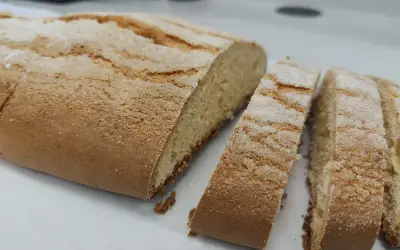
Romagna ciambella
- Preparation20 min
- Cooking40 min
- In total1 h
- Serves8
- Costabout 5 €0.60 € per person
Not a ring but a long, low loaf with sugar nibs on top: it is the breakfast and snack cake all over Romagna. It is dunked in milk, sweet Albana or Sangiovese.
Ingredients and step-by-step method
Ingredients
- 500 g of 00 flour
- 200 g of sugar and 3 eggs
- 100 g of soft butter (or lard, as in the old days)
- 100 ml of milk, the zest of a lemon, a sachet of baking powder
- Sugar nibs for the top
Method
- Heat the oven to 180 degrees. Beat the eggs with the sugar, then add the butter, milk and lemon zest.
- Add the flour with the baking powder and knead into a soft dough that can still be shaped.
- Shape a long, low loaf on the tray lined with baking paper, brush with a little milk or egg and cover with sugar nibs.
- Bake for 35-40 minutes until golden; let it cool before slicing.
From place to place
- In Romagna it is a low loaf with sugar nibs on top; in Bologna it is called brazadèla and some shape it into a ring.
- In farmhouses it was made with lard, in town with butter.
Grandma's secrets
- Do not overwork the dough: it should stay soft, and you shape it with wet hands.
- Brush it with milk before the sugar nibs: they stick and it turns glossy.
- It is better the next day, dunked in wine or milk.
DessertForlì, Cesena and Cesenatico
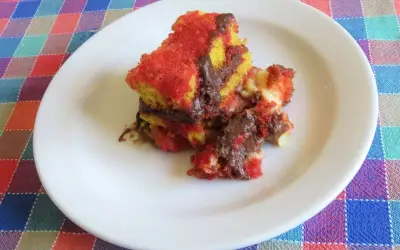
Zuppa inglese
- Preparation45 min
- Cooking15 min
- In total5 h
- Serves8
- Costabout 12 €1.50 € per person
The spoon dessert of Sundays in Romagna: ladyfingers or sponge cake soaked in alchermes, the red liqueur, layered with custard and chocolate cream. Pellegrino Artusi, from Forlimpopoli, wrote down its recipe in his 1891 book.
Ingredients and step-by-step method
Ingredients
- For the custard: 1 litre of whole milk, 6 yolks, 200 g of sugar, 80 g of flour (or starch), the zest of a lemon
- 80 g of dark chocolate
- 300 g of ladyfingers or a sponge cake of about 400 g
- 150 ml of alchermes and 100 ml of water
- Optional: a small glass of rum for some of the biscuits
Method
- Heat the milk with the lemon zest. Beat the yolks with the sugar, add the flour and pour in the hot milk in a thin stream.
- Return it to a low heat and stir until the custard thickens, 5-6 minutes from the first bubble.
- Divide the custard in two and melt the chopped chocolate into one half. Cover both with cling film touching the surface.
- Dilute the alchermes with the water and dip the ladyfingers quickly, without soaking them too much.
- In a dish alternate layers of biscuits, plain custard, biscuits and chocolate custard; finish with custard.
- Chill for at least 4 hours before serving.
From place to place
- In Romagna and Bologna the biscuits are soaked in alchermes; in many homes half in alchermes and half in rum or marsala.
- Artusi made it with sponge cake and fruit jelly; today ladyfingers are almost always used.
Grandma's secrets
- Dilute the alchermes with water: neat it overpowers everything and colours too much.
- Cover the custard with film touching the surface: no skin forms.
- Make it the night before: resting firms it up and it cuts cleanly.


Tuscan Romagna
2 recipes
First courseTuscan Romagna
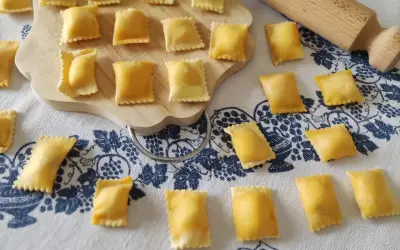
Potato tortelli
- Preparation1 h 10 min
- Cooking30 min
- In total2 h
- Serves4
- Costabout 8 €2 € per person
In the Apennines between Romagna and Tuscany, in Firenzuola, Palazzuolo sul Senio and Marradi, tortelli are filled with potato: it is the cooking of the Mugello reaching down towards Romagna. They are dressed with ragù or with butter and sage.
Ingredients and step-by-step method
Ingredients
- For the pasta: 400 g of 00 flour and 4 eggs
- 800 g of yellow-fleshed potatoes
- 1 garlic clove, a bunch of parsley, a spoonful of tomato paste
- 50 g of grated Parmigiano Reggiano, nutmeg, oil, salt and pepper
- Ragù, or 80 g of butter and sage, to dress
Method
- Boil the potatoes in their skins, peel them and mash them while still hot.
- In a small pan warm a drizzle of oil with the chopped garlic and parsley, add the tomato paste and pour everything over the potatoes.
- Add the Parmigiano, nutmeg, salt and pepper and mix well: the filling must be full of flavour.
- Roll out two thin sheets, put little heaps of filling on one, cover with the other, press around them and cut squares of about 6 cm.
- Cook them in salted water for 5-6 minutes and dress them with ragù or butter and sage.
From place to place
- In Marradi, Palazzuolo sul Senio and Firenzuola they are dressed with ragù or butter and sage, as in the Mugello.
- Coming down towards Romagna, in Tredozio, the potatoes end up in a pastry cooked on the stone: the bartolaccio.
Grandma's secrets
- Use floury yellow potatoes and mash them while still hot.
- The spoonful of tomato paste in the filling is the Mugello secret: it adds colour and flavour.
- Press the edges firmly with your fingers: air left inside makes them burst.
DessertTuscan Romagna
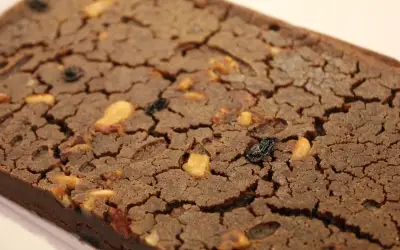
Castagnaccio
- Preparation15 min
- Cooking40 min
- In total1 h
- Serves6
- Costabout 8 €1.30 € per person
The autumn cake of the chestnut villages, such as Marradi, where the Marron Buono has the PGI mark: chestnut flour, water, oil, pine nuts, raisins and rosemary. No sugar, no eggs.
Ingredients and step-by-step method
Ingredients
- 500 g of chestnut flour
- About 650 ml of cold water
- 4 tablespoons of extra virgin olive oil, plus a little for the tin
- 50 g of pine nuts, 50 g of raisins, a few walnuts
- A sprig of rosemary and a pinch of salt
Method
- Heat the oven to 200 degrees and soak the raisins in warm water.
- Sift the chestnut flour into a bowl with the salt and add the water in a thin stream, whisking: you want a smooth, fairly runny batter.
- Stir in two spoonfuls of oil and half the squeezed raisins, then pour into a greased tin: the layer should be about 1 cm deep.
- Scatter the pine nuts, walnuts, remaining raisins and rosemary needles on top, with a drizzle of oil.
- Bake for 30-40 minutes, until the top is covered in cracks. It is eaten warm or cold, perhaps with ricotta.
From place to place
- In Marradi it is made with flour from its own chestnuts; in Tuscany with rosemary and pine nuts, in Tuscan Romagna some add walnuts and orange zest.
- On the Sundays of October Marradi holds its chestnut festival, and castagnaccio is eaten in the street, still warm.
Grandma's secrets
- Chestnut flour should be from this year's harvest: old flour tastes bitter.
- A thin layer, a finger deep at most: the top should crack.
- With a spoonful of ricotta on top it is a different thing altogether.


Marecchia Valley
2 recipes
FlatbreadsMarecchia Valley
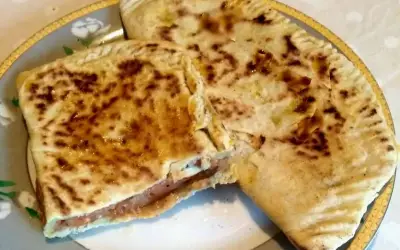
Crescioni with greens
- Preparation40 min
- Cooking25 min
- In total1 h 15 min
- Serves4
- Costabout 7 €1.80 € per person
Piadina dough folded into a half-moon and filled with wild greens, chard or spinach: between Rimini and the Valmarecchia they are also called cassoni. Today there are a thousand fillings, but greens is the oldest.
Ingredients and step-by-step method
Ingredients
- Piadina dough: 500 g of 00 flour, 60 g of lard, about 250 ml of water, 10 g of salt
- 1 kg of greens: chard, spinach or wild greens
- 2 garlic cloves, extra virgin olive oil, salt and pepper
- Optional: a little pancetta or grated cheese
Method
- Make the dough as for piadina and let it rest covered for 30 minutes.
- Boil the greens, squeeze them well and sauté them with oil and garlic; season and let them cool.
- Roll out thin discs of about 25 cm, put the filling on one half, fold into a half-moon and seal the edges with a pastry wheel or a fork.
- Cook on the griddle or a hot pan, 3-4 minutes per side, until golden in patches.
From place to place
- In Rimini and the Marecchia valley they are called cassoni, in Cesena and Forlì crescioni.
- Besides greens, the classic fillings are tomato and mozzarella, potato and sausage, squash and potato.
Grandma's secrets
- Squeeze the greens well: a wet crescione breaks on the griddle.
- Mix bitter greens, such as poppy leaves and dandelion, with sweet ones like chard and spinach.
- Seal the edges with a fork and make a small hole on top: it will not burst.
First courseMarecchia Valley
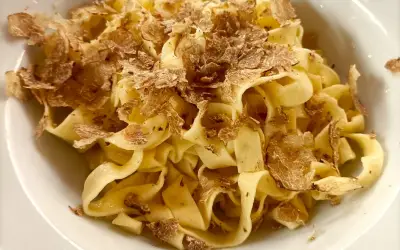
Tagliolini with white truffle
- Preparation45 min
- Cooking5 min
- In total1 h
- Serves4
- Costabout 110 €27.50 € per person
In autumn Sant'Agata Feltria and the Valmarecchia hills celebrate the white truffle with a fair on the Sundays of October. The best way to enjoy it is the simplest: egg pasta, butter and raw truffle in shavings.
Ingredients and step-by-step method
Ingredients
- For the pasta: 300 g of 00 flour and 3 eggs
- 60 g of butter
- 40 g of grated Parmigiano Reggiano
- A white truffle of 30-40 g, cleaned with a small brush
Method
- Knead the flour and eggs, let the dough rest 30 minutes and roll out a very thin sheet.
- Let it dry a little, roll it up and cut it into strips 2-3 mm wide.
- Cook the tagliolini in salted water for 1-2 minutes; meanwhile melt the butter in a pan with a little of the cooking water.
- Toss the pasta in the butter with the Parmigiano, plate it and shave the truffle thinly over the top at the last moment.
From place to place
- Sant'Agata Feltria holds its white truffle fair on the Sundays of October; a little further, in the Marche, Acqualagna is another truffle capital.
- In summer, in the Apennines, the black summer truffle, scorzone, is used: it costs much less.
Grandma's secrets
- White truffle is never cooked: it is shaved raw over the hot dish.
- Keep it in the fridge wrapped in kitchen paper, changed every day; in rice it dries out.
- Good butter, and not much: the aroma should be the truffle's.
- The truffle makes up almost all the cost: with summer scorzone it falls to less than a third.


Imola and surroundings
3 recipes
First courseImola and surroundings
Garganelli with peas and prosciutto
- Preparation1 h
- Cooking15 min
- In total1 h 30 min
- Serves4
- Costabout 10 €2.50 € per person
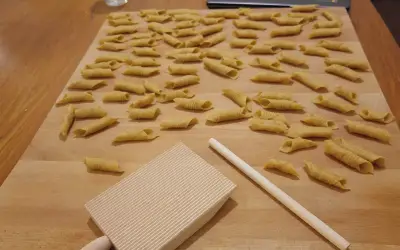
Egg macaroni rolled by hand on a little stick and ridged on the "comb", a weaving loom part: they are the typical pasta between Imola and the Romagna lowlands. The dough also contains cheese.
Ingredients and step-by-step method
Ingredients
- For the pasta: 400 g of 00 flour, 4 eggs, 30 g of grated Parmigiano Reggiano, nutmeg
- 300 g of peas, fresh or frozen
- 100 g of diced prosciutto crudo
- 1 shallot, 40 g of butter
- Stock, salt, pepper and Parmigiano to serve
Method
- Knead the flour, eggs, Parmigiano and a pinch of nutmeg; let the dough rest covered for half an hour.
- Roll out a thin sheet and cut it into 4 cm squares.
- Lay each square diagonally on the comb (or a large fork), roll it onto the stick while pressing and slide it off: it should stay ridged.
- In a pan soften the chopped shallot in the butter, add the prosciutto and then the peas with a ladle of stock; cook for 10-15 minutes.
- Cook the garganelli in salted water for 4-5 minutes, drain them into the pan and toss with the sauce and Parmigiano.
From place to place
- They belong to Imola and the Lower Romagna, as far as Lugo: the comb comes from the looms once used at home for weaving.
- In Imola they are dressed with peas and prosciutto or with ragù; further east also with sausage sauce.
Grandma's secrets
- The Parmigiano in the dough adds flavour and makes the pasta rough: the sauce clings better.
- Roll the square starting from one corner: that way the garganello has two beak-shaped ends.
- Without a comb, the back of a grater or the tines of a large fork will do.
DessertImola and surroundings
Sfrappole
- Preparation45 min
- Cooking20 min
- In total1 h 15 min
- Serves6
- Costabout 5 €0.80 € per person
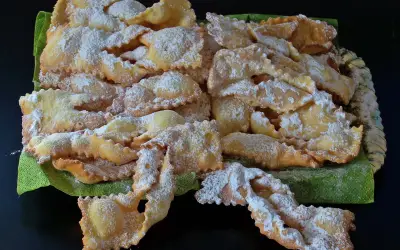
The thin, crisp Carnival fritters: between Bologna and Imola they are called sfrappole, elsewhere chiacchiere or frappe. They take little to make and vanish at once.
Ingredients and step-by-step method
Ingredients
- 300 g of 00 flour
- 2 eggs and 30 g of sugar
- 30 g of soft butter
- A small glass of anise liqueur or grappa, the grated zest of a lemon, a pinch of salt
- Seed oil for frying and icing sugar
Method
- Knead all the ingredients into a smooth, elastic dough; let it rest covered for 30 minutes.
- Roll out a very thin sheet and cut it with a pastry wheel into strips or rectangles, with a slit in the middle.
- Fry a few pieces at a time in hot oil (about 170 degrees): a few seconds per side are enough, they should stay pale.
- Drain them on kitchen paper and, once warm, dust them with icing sugar.
From place to place
- In Bologna and Imola sfrappole, in Romagna also fiocchetti, in the Marche frappe: the name changes, not the festivity.
- Some tie them into bows, others leave them as strips; in Romagna they often end with a drizzle of honey or alchermes.
Grandma's secrets
- The dough must be as thin as a veil: you should see your hand through it.
- A splash of white wine in the dough makes them full of bubbles.
- Fried in lard, as in the old days, they are crumblier.
 Image made with artificial intelligence
DessertImola and surroundings
Sabadoni
- Preparation1 h
- Cooking1 h 10 min
- In total2 h 30 min
- Serves10
- Costabout 12 €1.20 € per person
Sweet half-moons of winter in Romagna, between Imola, Faenza and the hills: soft shortcrust filled with chestnuts, fruit mostarda and saba, cooked grape must. They are made for All Souls' Day and Christmas.
Ingredients and step-by-step method
Ingredients
- For the pastry: 500 g of 00 flour, 150 g of sugar, 2 eggs, 100 g of lard or butter, half a sachet of baking powder, a little milk
- 500 g of chestnuts (or 300 g of dried chestnuts)
- 150 g of Romagna fruit mostarda or plum or quince jam
- 100 ml of saba, plus a little for glazing
- 1 tablespoon of unsweetened cocoa, the zest of an orange, a small glass of rum or aniseed liqueur
Method
- Score the chestnuts and boil them for 40-45 minutes (soak dried ones overnight first); peel them and pass them through a food mill.
- Mix the purée with the mostarda, saba, cocoa, orange zest and liqueur: you want a firm filling that holds on the spoon.
- Knead the flour, sugar, eggs, lard and baking powder, adding just enough milk for a soft dough; let it rest for 30 minutes.
- Roll it out 3-4 mm thick, cut 10 cm discs, put a spoonful of filling in the middle, fold into a half-moon and seal the edges with a fork.
- Bake at 180 degrees for 20-25 minutes; brush them with a thin layer of saba as soon as they come out.
From place to place
- Between Imola, Faenza and the hills the filling is chestnuts and saba; towards Lugo and Ravenna fruit mostarda goes in too.
- The name comes from saba: in autumn it was made by cooking the must for hours and lasted all winter.
Grandma's secrets
- If you cannot find saba, vincotto will do; balsamic vinegar will not.
- Wet the edges with a fingertip of water before sealing: in the oven the filling wants to escape.
- They are better the next day, when the pastry has taken up moisture from the filling.


Ferrara, Comacchio and the beaches
5 recipes
First courseFerrara, Comacchio and the beaches
Pumpkin cappellacci with butter and sage
- Preparation1 h
- Cooking50 min
- In total2 h
- Serves4
- Costabout 10 €2.50 € per person
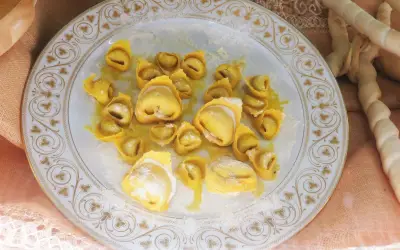
Ferrara's first course: egg pasta filled with pumpkin, sweet and savoury at once. The Ferrara version has the PGI mark; at home they are dressed with butter and sage or with ragù.
Ingredients and step-by-step method
Ingredients
- For the pasta: 400 g of 00 flour and 4 eggs
- 1 kg of violin pumpkin (about 600 g of cooked flesh)
- 120 g of grated Parmigiano Reggiano
- Nutmeg, salt, pepper and breadcrumbs if needed
- 80 g of butter and a few sage leaves
Method
- Cut the pumpkin into slices, remove the seeds and bake it at 180 degrees for about 45 minutes, until soft and dry.
- Press the flesh through a sieve, add the Parmigiano, nutmeg, salt and pepper. If the filling is too soft add a spoonful of breadcrumbs.
- Roll out a thin sheet and cut it into squares of 7-8 cm.
- Put a walnut-sized spoonful of filling in the middle, fold into a triangle pressing the edges, then join the two outer tips: you get the hat shape.
- Cook them in salted water for 4-5 minutes while you melt the butter with the sage in a pan; toss and finish with Parmigiano.
From place to place
- In Ferrara the filling is only squash and cheese, and the cappellaccio is as big as the farmers' straw hat it is named after.
- A little further north, in Mantua, pumpkin tortelli are sweet: amaretti and mostarda. Not in Ferrara.
Grandma's secrets
- Bake the squash, do not boil it: it loses water and the filling stays firm.
- If the filling is soft add a spoonful of breadcrumbs and leave it overnight in the fridge.
- The sage should turn crisp and the butter just hazelnut-brown, not burnt.
First courseFerrara, Comacchio and the beaches
Ferrara macaroni pie
- Preparation2 h
- Cooking1 h 30 min
- In total4 h
- Serves8
- Costabout 35 €4.40 € per person
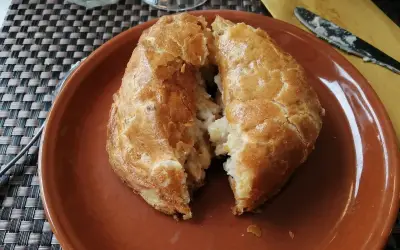
A shell of sweet shortcrust enclosing macaroni with ragù, béchamel and porcini mushrooms: sweet and savoury together, as the Renaissance court of the Este family liked it. In Ferrara they call it al pastiz.
Ingredients and step-by-step method
Ingredients
- For the pastry: 500 g of 00 flour, 200 g of sugar, 250 g of cold butter, 3 yolks and 1 egg, the zest of a lemon
- 400 g of ridged macaroni (or sedanini)
- 500 g of white ragù: minced veal and pork with a few chicken livers, cooked with butter, white wine and stock
- 300 g of porcini mushrooms (or 30 g dried, soaked)
- Half a litre of béchamel and 100 g of grated Parmigiano Reggiano
- Butter, nutmeg, salt, pepper; optionally a few shavings of truffle
Method
- Make the pastry by working the flour, sugar, diced butter, eggs and zest quickly; wrap it in cling film and chill for an hour.
- Cook the white ragù on a low heat for an hour and sauté the porcini in a pan with butter and garlic.
- Boil the macaroni very al dente, half cooked, and dress them with the ragù, porcini, béchamel and Parmigiano.
- Line a deep buttered tin with two thirds of the pastry, fill it with the macaroni and cover with the rest of the pastry, sealing the edges well.
- Make a small hole in the middle for the steam, brush with egg and bake at 180 degrees for about 45 minutes, until the crust is golden.
- Let it rest for 15 minutes before turning it out and cutting it into wedges.
From place to place
- In Ferrara the pastry is sweet and the ragù white, with mushrooms and sometimes truffle: it is the holiday dish.
- In farmhouses it was made more simply, with dried mushrooms and Sunday's leftover ragù.
Grandma's secrets
- Work the pastry briefly and cold: if it warms up it cracks when you roll it.
- The macaroni should be half cooked: they finish cooking in the oven with the moisture of the sauce.
- A dusting of icing sugar on the crust, straight from the oven, is the Ferrara touch.
Main courseFerrara, Comacchio and the beaches
Salama da sugo with mashed potatoes
- Preparation30 min
- Cooking6 h
- In total7 h
- Serves6
- Costabout 40 €6.70 € per person
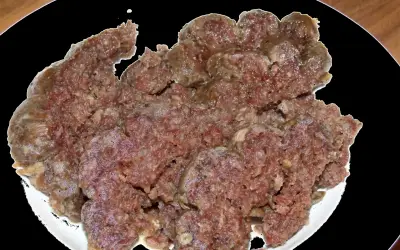
The Ferrara cured meat eaten cooked and hot, with a spoon, on a bed of mashed potatoes: a winter and holiday dish. The cooking is long but simple: it does itself.
Ingredients and step-by-step method
Ingredients
- 1 salama da sugo of about 1 kg
- 1 kg of floury potatoes
- 300 ml of whole milk and 50 g of butter
- Nutmeg, salt and grated Parmigiano
Method
- The night before, soak the salama in warm water to remove the ageing crust, then brush it gently.
- Wrap it in a cotton cloth and tie it to a wooden spoon resting across the rim of a tall pot: it must hang in the water without touching the bottom.
- Cook it over a low heat, with the water barely bubbling, for 5-6 hours; top up with hot water when the level drops.
- Meanwhile boil the potatoes, mash them and work them on the heat with butter, hot milk, salt, nutmeg and Parmigiano.
- Remove the cloth, cut open the top of the salama and serve it by the spoonful on the mash with its juices.
From place to place
- Salama da sugo comes from Ferrara and has PGI status; the hamlet of Madonna Boschi, in Poggio Renatico, is considered its home.
- In Ferrara it is served with mashed potato; in some homes with polenta or baked squash.
Grandma's secrets
- Never prick it before cooking: it would lose its juices.
- It must hang in the water without touching the bottom, or the skin burns and splits.
- If there is some left, the next day crumble it over pasta or into risotto.
Main courseFerrara, Comacchio and the beaches
Comacchio-style stewed eel
- Preparation20 min
- Cooking40 min
- In total1 h
- Serves4
- Costabout 25 €6.30 € per person
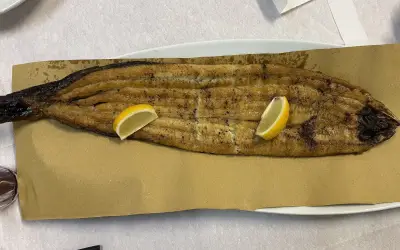
In the Comacchio lagoons eel has been at home for centuries: marinated, grilled or stewed. This is the family version, with tomato and vinegar, served with polenta.
Ingredients and step-by-step method
Ingredients
- 1 kg of eel, cleaned and cut into chunks
- 1 onion and 1 garlic clove
- 400 g of peeled tomatoes
- Half a glass of white wine vinegar
- Extra virgin olive oil, parsley, salt, pepper; polenta to serve
Method
- Soften the sliced onion and the garlic in a pan with the oil.
- Add the eel chunks and brown them on all sides.
- Pour in the vinegar and let it evaporate, then add the crushed tomatoes, salt and pepper.
- Cover and cook over a low heat for about 30 minutes, shaking the pan instead of stirring so the pieces do not break.
- Finish with chopped parsley and serve with soft polenta.
From place to place
- In Comacchio eel is marinated with vinegar and salt: the traditional marinated eel of the lagoons is a Slow Food presidium.
- In the wetlands of Argenta and Campotto it is mostly grilled, at the autumn food festivals.
Grandma's secrets
- Have the fishmonger clean and cut it: it is slippery and hard to skin.
- The vinegar removes the muddy taste and cuts the fat: do not skip it.
- Serve it with soft polenta, not the firm kind you slice.
DessertFerrara, Comacchio and the beaches
Torta tenerina
- Preparation20 min
- Cooking25 min
- In total50 min
- Serves8
- Costabout 9 €1.10 € per person
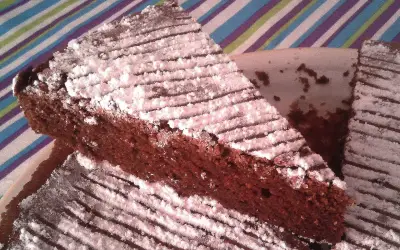
Ferrara's chocolate cake: low, with a thin crust on top and a moist, soft heart. In dialect it is also called torta tacolenta, sticky cake, and that is exactly how it should turn out.
Ingredients and step-by-step method
Ingredients
- 200 g of dark chocolate
- 100 g of butter
- 4 eggs, yolks and whites separated
- 150 g of sugar
- 50 g of 00 flour (or potato starch)
- A pinch of salt and icing sugar to finish
Method
- Heat the oven to 180 degrees and line a 24 cm tin with baking paper.
- Melt the chocolate with the butter over a bain-marie and let it cool slightly.
- Beat the yolks with 100 g of the sugar until pale, then add the chocolate and the sifted flour.
- Whisk the whites with the salt and the rest of the sugar and fold them in gently, from the bottom up.
- Pour into the tin and bake for 20-25 minutes: a crust forms on top, the inside must stay moist.
- Let it cool in the tin and dust it with icing sugar.
From place to place
- It was born in Ferrara in the early twentieth century: it is said to have been dedicated to Queen Elena, wife of Victor Emmanuel III, which is why some still call it torta Regina.
- In Ferrara's pastry shops today it is also served with mascarpone or cream.
Grandma's secrets
- Do not overbake it: if the skewer comes out clean it is already overdone.
- Choose a good dark chocolate, 60-70 per cent.
- Cut it cold, even better the next day.


Bologna and its province
6 recipes
First courseBologna and its province
Tagliatelle with ragù
- Preparation1 h
- Cooking2 h 30 min
- In total4 h
- Serves4
- Costabout 14 €3.50 € per person
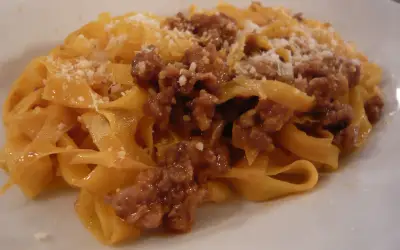
Bologna's dish par excellence: hand-rolled egg pasta and a meat sauce cooked for a long time. The ragù recipe was deposited at the Bologna Chamber of Commerce by the Accademia Italiana della Cucina in 1982.
Ingredients and step-by-step method
Ingredients
- For the pasta: 400 g of 00 flour and 4 eggs
- 300 g of coarsely minced beef (flank or brisket)
- 150 g of flat pancetta
- 50 g of carrot, 50 g of celery, 50 g of onion
- 300 g of tomato passata
- Half a glass of dry white wine and half a glass of whole milk
- Meat stock, oil or butter, salt and pepper
Method
- Chop the pancetta and melt it slowly in a saucepan with a drizzle of oil or a knob of butter.
- Add the very finely chopped carrot, celery and onion and let them soften over a low heat.
- Add the meat and brown it, stirring until it sizzles, then pour in the wine and let it evaporate.
- Add the passata, cover and cook over a very low heat for about two hours, adding stock when needed.
- Towards the end pour in the milk and season with salt and pepper.
- Knead the flour and eggs, roll out a thin sheet, let it dry a little, roll it up and cut it into strips about 8 mm wide.
- Cook the tagliatelle in salted water for 2-3 minutes and toss them with the ragù and grated Parmigiano Reggiano.
From place to place
- In Bologna the ragù is beef and pancetta, with little tomato and milk at the end; the cooked tagliatella, says the deposited recipe, should be about 8 mm wide.
- In Romagna the ragù is richer: pork and beef together, sometimes chicken livers, and it cooks for up to four hours.
- In farmhouses, lard chopped with a knife was used instead of pancetta.
Grandma's secrets
- The ragù must not boil: it should just "blip", a bubble every now and then. The slower, the better.
- Ask the butcher to mince the meat coarsely, just once: minced fine it turns to mush.
- Dress the tagliatelle in a warm bowl with a ladle of their cooking water: the ragù clings better.
- Ragù is better the next day: make it on Saturday for Sunday lunch.
First courseBologna and its province
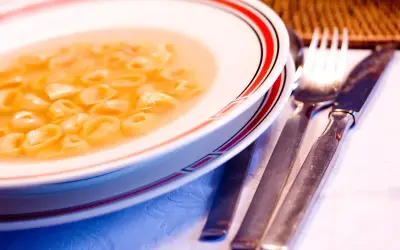
Tortellini in broth
- Preparation2 h
- Cooking30 min
- In total3 h
- Serves6
- Costabout 32 €5.30 € per person
Small, filled with meat and folded around a finger: they are the festive dish of Bologna and the whole plain around it. The Dotta Confraternita del Tortellino deposited the recipe in 1974.
Ingredients and step-by-step method
Ingredients
- For the pasta: 300 g of 00 flour and 3 eggs
- 100 g of pork loin
- 100 g of prosciutto crudo and 100 g of Mortadella Bologna
- 130 g of grated Parmigiano Reggiano
- 1 egg, nutmeg, a knob of butter
- 2 litres of capon or beef stock
Method
- Brown the pork loin in pieces in the butter over a low heat and let it cool.
- Mince the loin, prosciutto and mortadella finely; add the Parmigiano, the egg and the nutmeg and mix well. Let the filling rest a few hours in the fridge.
- Knead the flour and eggs and roll out a very thin sheet; cut it into squares of about 3 cm.
- Put a little ball of filling in the middle of each square, fold it into a triangle, then wrap it around your finger and join the two tips.
- Cook the tortellini in boiling stock for 3-4 minutes and serve them in the stock, with Parmigiano on the side.
From place to place
- In Bologna they are eaten only in broth, ideally capon broth: cream on tortellini is almost an insult here.
- Castelfranco Emilia, between Bologna and Modena, claims to be the home of the tortellino: legend tells of an innkeeper who shaped it on Venus's navel.
- Past Imola the tortellino gives way to the Romagna cappelletto, bigger and with cheese in the filling.
Grandma's secrets
- Make the filling the day before: the flavours blend and it is easier to work.
- Roll out a little pasta at a time and fold at once: if it dries the tortellino opens in the pot.
- Good broth: half capon and half beef, celery, carrot and an onion studded with a clove, three hours on a low heat without ever boiling hard.
- If you have some left over, freeze them raw, well apart on a tray, then put them in a bag: cook them straight from frozen.
First courseBologna and its province
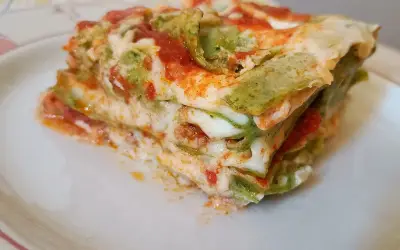
Green lasagne Bolognese style
- Preparation1 h 30 min
- Cooking3 h
- In total4 h 30 min
- Serves6
- Costabout 24 €4 € per person
The pasta is green because spinach goes into the dough: layers of pasta, ragù, béchamel and Parmigiano Reggiano, browned in the oven. It is the Sunday and holiday dish of Bologna.
Ingredients and step-by-step method
Ingredients
- For the green pasta: 400 g of 00 flour, 3 eggs, 150 g of boiled spinach, squeezed and very finely chopped
- The Bolognese ragù of the tagliatelle recipe, doubled (about 1 kg)
- For the béchamel: 1 litre of whole milk, 80 g of butter, 80 g of flour, nutmeg and salt
- 150 g of grated Parmigiano Reggiano
- Butter for the dish and a few flakes for the top
Method
- Make the ragù calmly, even the day before: it needs at least two hours of cooking.
- Knead the flour, eggs and spinach into an even green dough; let it rest covered for 30 minutes.
- Roll out a thin sheet and cut it into rectangles the size of the dish; blanch them a few at a time for 30 seconds and lay them on a cloth.
- For the béchamel melt the butter, stir in the flour, then the hot milk in a thin stream; cook until it coats the spoon and season with salt and nutmeg.
- Butter the dish and build the layers: pasta, ragù, béchamel, Parmigiano. Go on for 5 or 6 layers and finish with ragù, béchamel, Parmigiano and flakes of butter.
- Bake at 180 degrees for 35-40 minutes, until the edges are crisp.
- Let it rest for 15 minutes before cutting: the slices will hold their shape.
From place to place
- In Bologna the pasta is green, with ragù, béchamel and Parmigiano: no mozzarella, no hard-boiled eggs, no meatballs.
- In the countryside the green pasta was also made with young nettles instead of spinach.
- In Romagna you also find them with yellow egg pasta and a ragù of several meats.
Grandma's secrets
- Squeeze the spinach to the last drop: if it is wet the pasta tears.
- The béchamel should bind, not drown: many thin layers make a good lasagna.
- The crisp edges are the most fought-over part: use a metal dish, not glass.
 Image made with artificial intelligence
FlatbreadsBologna and its province
Fried crescentine
- Preparation25 min
- Cooking20 min
- In total2 h
- Serves6
- Costabout 6 €1 € per person
In Bologna the crescentina is a square of fried dough that puffs up like a pillow: it is eaten hot with mortadella, cured meats and squacquerone. In Modena the same thing is called gnocco fritto.
Ingredients and step-by-step method
Ingredients
- 500 g of 00 flour
- 50 g of soft lard
- About 250 ml of lukewarm milk and water, half and half
- 10 g of fresh yeast (or half a sachet of instant yeast for savoury bakes), 10 g of salt
- Lard (or peanut oil) for frying
- To serve: mortadella, prosciutto, salami, squacquerone
Method
- Dissolve the yeast in a little of the lukewarm milk.
- Knead the flour with the lard, the yeast, the rest of the liquid and finally the salt, until the dough is smooth and soft.
- Cover it and let it rest in a warm place for about an hour.
- Roll it out about 3 mm thick and cut it with a pastry wheel into diamonds or squares of 6-7 cm.
- Fry a few pieces at a time in very hot fat (175 degrees): within seconds they puff up; turn them and take them out as soon as they are golden.
- Drain them on kitchen paper and serve them straight away, with the cured meats and the cheese.
From place to place
- In Bologna they are crescentine, in Modena gnocco fritto, in Ferrara pinzini: the dough is almost the same.
- In the Modena Apennines, though, the crescentina is a round bread baked in tigelle moulds.
- In Romagna its cousin is fried piadina, made with piadina dough.
Grandma's secrets
- Fry them in lard: they come out drier, puffier and more fragrant.
- A splash of sparkling water in the dough helps them puff up.
- Do not roll them too thin: under 2 mm they will not puff.
Side dishBologna and its province
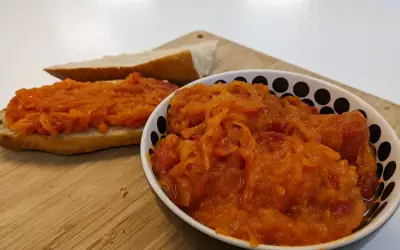
Friggione
- Preparation20 min
- Cooking2 h 40 min
- In total3 h
- Serves4
- Costabout 5 €1.30 € per person
The most Bolognese of side dishes: white onions and tomato cooked slowly for hours until they turn into a sweet cream. It is eaten with boiled meat, eggs or simply on bread.
Ingredients and step-by-step method
Ingredients
- 1 kg of white onions
- 400 g of peeled tomatoes
- 50 g of lard or 4 tablespoons of extra virgin olive oil
- Salt and a pinch of sugar
Method
- Slice the onions very thinly and leave them in cold salted water for half an hour, then drain.
- Put them in a pan with the lard and a pinch of salt, cover and cook over a very low heat for about an hour and a half, stirring now and then.
- Add the crushed tomatoes and the pinch of sugar and keep cooking uncovered for another hour, until the sauce has reduced and the onions are hazelnut brown.
- Serve it hot or warm: it is even better the next day.
From place to place
- It is a dish of Bologna and its plain; the favourite onions were the sweet ones from Medicina.
- In the old inns it was cooked in lard; today many families use extra virgin olive oil.
Grandma's secrets
- The secret is time: the onion must melt, not fry. If it sticks, a spoonful of water.
- The pinch of sugar takes away the acidity of the tomato.
- Make plenty: in a jar in the fridge it keeps 4-5 days and makes a snack on toasted bread.
 Image made with artificial intelligence
DessertBologna and its province
Rice cake
- Preparation30 min
- Cooking1 h 40 min
- In total2 h 30 min
- Serves10
- Costabout 9 €0.90 € per person
In Bologna it is also called torta degli addobbi, because it was offered during the Addobbi, the festivals each parish celebrates once every ten years. Rice cooked in milk, almonds, candied citron and a drop of liqueur: it is cut into diamonds.
Ingredients and step-by-step method
Ingredients
- 1 litre of whole milk and 200 g of round-grain rice
- 200 g of sugar, the zest of a lemon, a pinch of salt
- 5 eggs
- 100 g of blanched toasted almonds, coarsely chopped; 50 g of diced candied citron
- Almond liqueur (amaretto) to soak, butter and breadcrumbs for the tin
Method
- Bring the milk to the boil with the sugar, lemon zest and salt, add the rice and cook it on a low heat for about 40 minutes, stirring often, until it has absorbed almost all the milk.
- Remove the zest and let the rice cool.
- Add the eggs one at a time, then the almonds and the citron.
- Pour into a rectangular tin, buttered and dusted with breadcrumbs, 3-4 cm deep.
- Bake at 170 degrees for about an hour, until the top is well browned.
- While still hot, prick it and soak it with the liqueur; cut it into diamonds only once it is cold.
From place to place
- In Bologna it is cut into diamonds and each piece has its toothpick; it is soaked in almond liqueur.
- In the rest of Emilia and in Romagna rice cake is often made without almonds and lower.
Grandma's secrets
- Use round-grain rice: it releases starch and holds the cake together.
- Soak it while hot and let it rest overnight: the next day it is perfect.
- Some caramelise the tin with sugar: the crust turns amber and glossy.


Pesaro, Fano and the Marche coast
2 recipes
Main coursePesaro, Fano and the Marche coast
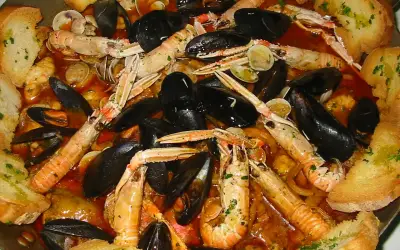
Fano-style fish stew
- Preparation40 min
- Cooking30 min
- In total1 h 15 min
- Serves4
- Costabout 45 €11.30 € per person
The fish soup of the Fano fishermen: many Adriatic fish, onion, vinegar and tomato paste, cooked in a wide pan without ever stirring. It is served with toasted bread.
Ingredients and step-by-step method
Ingredients
- 1.5 kg of mixed Adriatic fish: cuttlefish, mantis shrimp, red mullet, smooth-hound, monkfish, sole, mussels
- 1 large onion
- Half a glass of white wine vinegar
- 2 tablespoons of tomato paste
- Extra virgin olive oil, salt, pepper; slices of toasted country bread
Method
- Clean the fish: the cuttlefish in strips, the large fish in steaks, the small ones whole.
- In a wide pan soften the chopped onion in the oil, add the cuttlefish and cook for 10 minutes.
- Pour in the vinegar, let it evaporate and add the tomato paste dissolved in a glass of hot water.
- Lay the fish in layers, from the firmest (monkfish, smooth-hound) to the most delicate (sole, red mullet, mussels); season.
- Cook over a medium heat for 15-20 minutes without stirring: shake the pan now and then. Serve in bowls over the toasted bread.
From place to place
- In Fano it is made with vinegar and tomato paste, no fresh tomato; further south, in Porto Recanati, wild saffron replaces the tomato.
- On the Romagna coast, from Rimini to Cesenatico, brodetto has tomato passata and less vinegar.
- In Ancona tradition calls for thirteen kinds of fish.
Grandma's secrets
- Never stir: shake the pan, or the fish will break.
- The firmest fish goes at the bottom, the most delicate on top, and the mussels last.
- Rub the toasted bread with garlic and put it at the bottom of the plate.
Main coursePesaro, Fano and the Marche coast
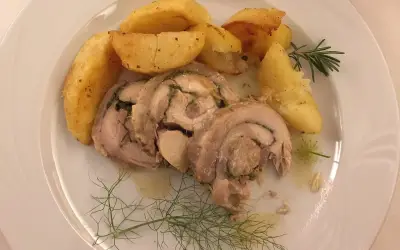
Rabbit in porchetta
- Preparation30 min
- Cooking1 h 30 min
- In total2 h
- Serves4
- Costabout 22 €5.50 € per person
Rabbit cooked "like porchetta", with wild fennel, garlic and pancetta: it is one of the Sunday main courses in the Marche, from the Pesaro coast up to Montefeltro.
Ingredients and step-by-step method
Ingredients
- 1 whole rabbit of about 1.5 kg, boned or opened out, with its liver
- A bunch of wild fennel (or 2 teaspoons of fennel seeds)
- 150 g of thinly sliced pancetta
- 3 garlic cloves, rosemary
- Half a glass of white wine, extra virgin olive oil, salt and pepper
Method
- Heat the oven to 180 degrees. Blanch the wild fennel for 5 minutes, squeeze it and chop it with the garlic and the rabbit liver.
- Open the rabbit out on the board, season it and spread the chopped mixture over it; cover with half the pancetta.
- Roll it up tightly, wrap it in the rest of the pancetta and tie it with string.
- Put it in a roasting tin with oil and rosemary and roast for about an hour and a half, pouring over the wine after the first half hour and turning it now and then.
- Let it rest 10 minutes, remove the string and slice it, with its cooking juices.
From place to place
- In the Marche wild fennel is a must; towards Pesaro and Fano duck and chicken are also made "in porchetta".
- In the Montefeltro some also put the rabbit's liver, chopped with garlic, in the stuffing.
Grandma's secrets
- Without wild fennel, use the fronds of ordinary fennel and a few seeds.
- Add the wine halfway through, and not much: the rabbit should roast, not boil.
- Put the potatoes in the same tin: they soak up all the juices.


Indicative cost of the ingredients, at average supermarket and market prices in Romagna in October 2026. Preparation is the work of your hands, cooking the time on the stove or in the oven; the total also includes resting and rising.
Home recipes gathered from tradition: for tagliatelle with ragù and tortellini we follow the recipes deposited at the Bologna Chamber of Commerce, for cappelletti, passatelli and zuppa inglese Pellegrino Artusi's book. Every family has its own version: the quantities are a guide. Photos with a label were made with artificial intelligence, the others are real. To find out more: Food & wine · Cooking classes · Markets · Farm stays
Want to taste them where they were born?
From the trattorias of Comacchio to the inns of Brisighella, from Casa Artusi in Forlimpopoli to the food festivals of the Montefeltro: a transfer with a driver takes you to the table and back to your hotel, even after a glass of Sangiovese.
Is something missing, or would you like to add some information? Tell us.
Have you found a mistake or something not quite right? Let us know.