Forlimpopoli and Bertinoro: Artusi and the balcony of Romagna
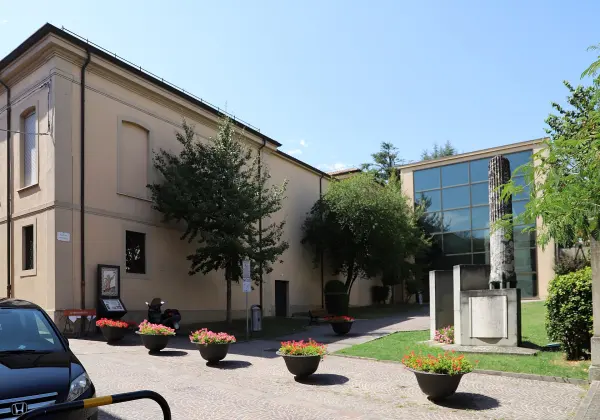
Casa Artusi and the fortress of Forlimpopoli, the parish church of Polenta celebrated by Carducci, the Column of Hospitality and the Rocca of Bertinoro.
Two towns on the Via Emilia and in the hills between Forlì and Cesena. Forlimpopoli is the home of Pellegrino Artusi, the father of Italian cuisine; Bertinoro is 'the balcony of Romagna', with views stretching to the sea, Albana wine and a column with twelve rings where travellers once discovered which family would host them. In between, among the cypresses, stands one of Romagna's oldest parish churches.
When to goAll year round; the Festa Artusiana at the end of June, the Festa dell'Ospitalità in early September
The plan from Marotta
Leave Marotta for Forlimpopoli1 h 10 driving, 103 km
Forlimpopoli1 h 25 of visits: Casa Artusi, Rocca and Archaeological Museum
Drive on to Pieve di Polenta15 min driving, 10 km
Pieve di Polenta25 min of visits: Pieve di San Donato in Polenta
Drive on to Bertinoro15 min driving, 6 km
Bertinoro1 h 15 of visits: Column of Hospitality and the terrace, Rocca and Interreligious Museum
Drive back to Marotta1 h 10 driving, 107 km
Back in Marotta
Times are a guide: driving times are worked out without traffic, then come the visits and ten minutes at every stop to park. In summer towards the coast and at rush hour allow extra time.
What you will see
1Forlimpopoli
Casa Artusi 30 min
Pellegrino Artusi was born here in 1820 and in 1891 published at his own expense 'La scienza in cucina e l'arte di mangiar bene', 790 recipes from all over Italy: the book that unified Italian cuisine. In the restored Servite convent you'll find his library with papers, a restaurant and the cookery school, where the 'Mariette', the local pasta-makers, teach tourists how to roll out pasta dough, in several languages.
On Saturdays and Sundays guided visits by request only. Cooking courses must be booked.
Rocca and Archaeological Museum 35 min
The square fortress with four towers, commissioned by Cardinal Albornoz from 1360, stands intact among the houses. Inside, the archaeological museum tells the story of Roman Forum Livii, with amphorae from local kilns and mosaics. In the fortress theatre in 1851, the Passatore gang robbed the audience and the homes of notables, including the Artusi family: the family left for Florence.
The museum opens on varying days and times: check beforehand. The fortress can always be seen from outside.
2Pieve di Polenta
Pieve di San Donato in Polenta 15 min
One of Romagna's oldest churches, from the 9th-10th century, with capitals carved with animals and a crypt. Polenta was the land of the Da Polenta family, lords of Ravenna: one of them was Francesca, she of Paolo and Francesca, and Guido Novello da Polenta hosted Dante in his final years. In 1897 Carducci dedicated the ode 'La chiesa di Polenta' to it, making it known throughout Italy.
Usually open during the day.
3Bertinoro
Column of Hospitality and the terrace 15 min
In the square stands a stone column with twelve rings: noble families used to compete to host travellers, so the visitor would tie his horse to a ring and the family of that ring would host him, free of charge. Dante recalls Bertinoro's generosity in the fourteenth canto of Purgatorio. From the square's terrace the plain stretches all the way to the sea.
Always visible.
Rocca and Interreligious Museum 35 min
The fortress at the top of the hill, from the 11th century, was for centuries the residence of bishops; today it belongs to the University of Bologna. In the cellars the Interreligious Museum, the only one in Italy dedicated to dialogue between Judaism, Christianity and Islam, with a clear route suitable for children too.
The museum opens in the afternoon at weekends (more days in summer): ideal for an afternoon visit.
Tips
The name Bertinoro, legend has it, comes from Galla Placidia: Albana wine 'should be drunk from gold'. A tasting at one of the village's wineries rounds off the trip nicely.
With a cooking course at Casa Artusi, the trip becomes a full day out, with lunch cooked by you.
The same trip from other towns
How long it takes from each town, the drive back included. Tap a town to see the plan from there.
Almost every old town has a limited traffic zone (ZTL) with cameras: park outside and walk in. The fine reaches your home, abroad too. ZTL and car parks town by town
This trip with a driver
Romagna Transfer picks you up at your hotel, drops you in front of every stop and brings you back: no parking, no ZTL, and the wine is yours to enjoy.
Trips written by our editors from the facts of our monument pages and the official sites. Opening days and hours change: the note under every place tells you what to check before you leave. No prices: you find them on the museums' sites.