In depth
What it is
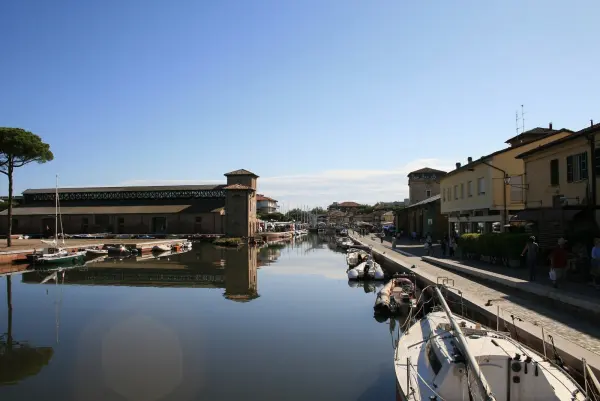
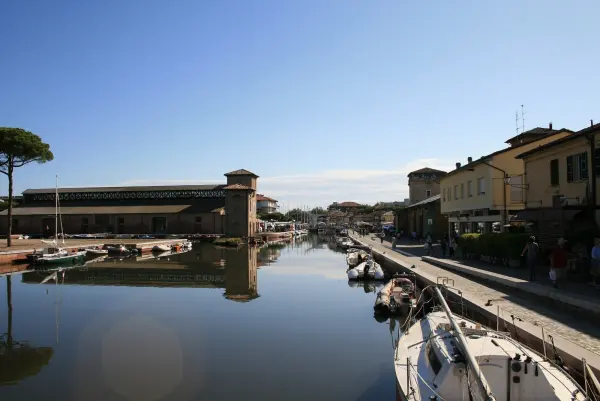
Cervia, the city of salt, tells the story of the Nativity every Christmas through its most iconic material. The most photographed nativity scene is the life-size one set up on an ancient burchiella, the flat-bottomed boat that once transported salt along the canals of the salt pans, moored on the canal harbour in front of the Magazzini del Sale, in via Nazario Sauro. In the same complex, inside the Magazzini, a trail of handcrafted nativity scenes unfolds, while at MUSA, the city's salt museum, a nativity scene made entirely of crystallised salt is preserved.
What makes it special
The absolute distinctive feature is the setting on the water: the statues of the Holy Family, as tall as real people, are covered in salt and surrounded by three pyramids of salt that emerge directly from the canal, creating evocative plays of light at dusk. At MUSA, very different nativity scenes coexist: a miniature one, with figurines from 10 to 40 centimetres obtained through guided crystallisation of salt and kept in a display case that protects them from humidity and temperature changes, one with life-size figures in patinated terracotta set in a casone da salinaro, and a mechanical animated one dedicated to the traditional crafts of Cervia.
Origins and history
The miniature salt nativity scene was created in 1992 by Agostino Finchi, a salt worker who put his experience at the service of a far from simple technique: guided crystallisation of salt, corrected by hand day after day to give the figures the desired shape. The presepe dei salinari, with its life-size statues, dates back to the 1980s and bears the signature of sculptor Paolo Onestini, son of the renowned Cervia ceramist Giacomo Onestini. The mechanical nativity scene is the result of craft work lasting over twenty years. The origins of the nativity scene on the burchiella, seasonally set up on the canal harbour, are not precisely documented; the MUSA nativity scenes are now preserved and displayed in the museum, established in 2004 from the restoration of the Magazzini del Sale.
What you can see
On the burchiella you can see a complete Nativity, with the Holy Family, the ox and the donkey, all covered in salt, and the three pyramids rising from the canal water. Continuing into the Magazzini del Sale you encounter a trail of handcrafted nativity scenes made by hobbyists and local associations. At MUSA you can admire in sequence the miniature crystallised salt nativity scene, protected in a display case, the presepe dei salinari set in a reed casone with terracotta figures depicting daily work in the salt pans, and an animated mechanical nativity scene that stages fishermen, woodcutters and other typical crafts of the Cervia area.
When and how to visit
The usual opening period runs from early December to Epiphany; in the latest edition the nativity scene on the burchiella was visible from 6 December 2025 to 6 January 2026, along the canal harbour, with free admission and no closing times as it is an outdoor installation. The trail of handcrafted nativity scenes in the Magazzini del Sale is generally open on the same days. The MUSA nativity scenes, at via Nazario Sauro 24, in the latest edition were open from 6 to 14 December at weekends and public holidays from 2.30 pm to 7 pm, and from 20 December to 6 January every day from 2.30 pm to 7 pm, with full ticket at 2 euros, reduced to 1 euro for ages 13 to 18, free for children under 12, people with disabilities and on the first Sunday of the month. Before planning your visit it is always advisable to check dates and times on the official channels of the Comune di Cervia, as they may vary from year to year.